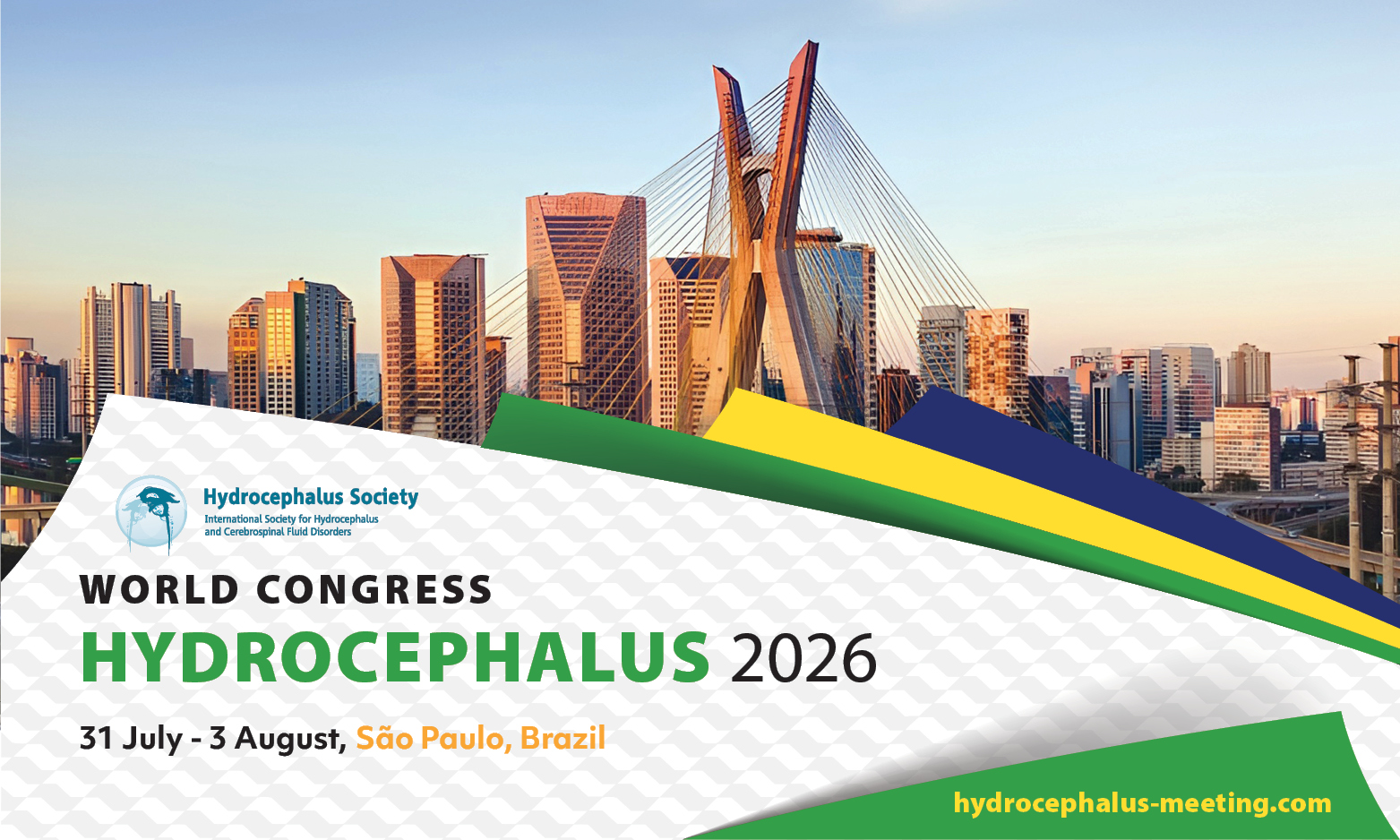
Call for abstracts reminder!
Abstract submission for the Hydrocephalus 2026 World Congress, which will be held in São Paulo, Brazil, on 31 July – 3 August 2026, is open!
Get the chance to be part of the largest worldwide event dedicated to Hydrocephalus treatment! Present your research on a truly global platform, as the Congress is attended by participants coming from more than 41 countries.
|
|
Young Investigators Awards |
|
Young researchers are invited to submit their work for consideration. Selected abstracts will be presented in three dedicated sessions during the Congress, and award recipients will receive prize money and/or complimentary registration for the next Hydrocephalus Annual Congress.
Submit your abstract by 16 March 2026 and become part of the
scientific programme of the Congress!
 |
New webinar! |
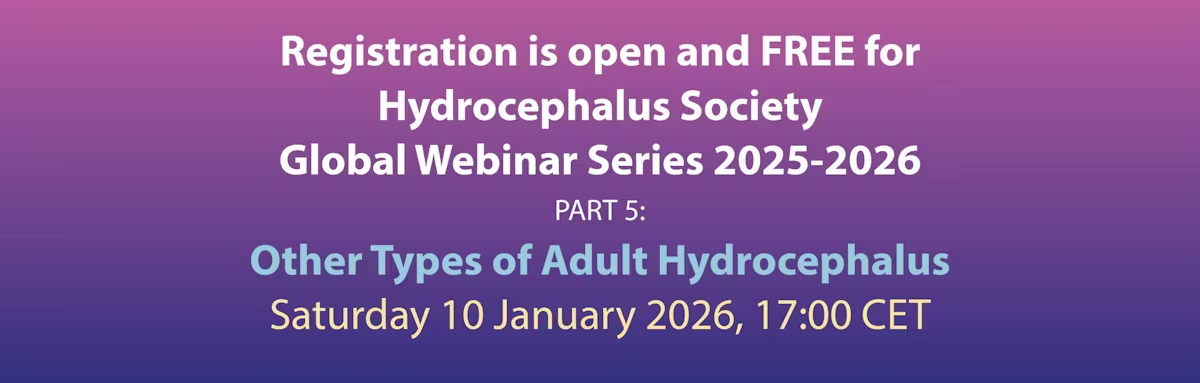
You can now register for the 2025-2026 Global Webinar Series Part 5:
Other Types of Adult Hydrocephalus
Webinar starts on
Saturday, 10 January 2026, 17.00 CET
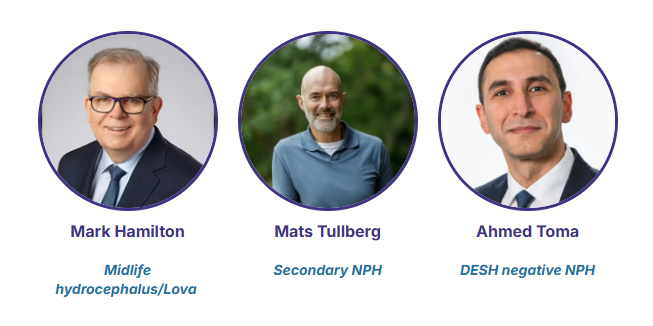
We are very proud to introduce our speakers for Part 5, who will feature 3
featuring three outstanding lectures presented by renowned experts:
Previous recordings🎥
Don’t miss out on the recording of the 2025-2026 Global Webinar Series
Part 4: Regional webinar ONLINE class (Hydrocephalus Society Webinar for Latin America).
Previous webinar recordings can be found in the Member’s Corner.
Paper of the month – December 2025📑
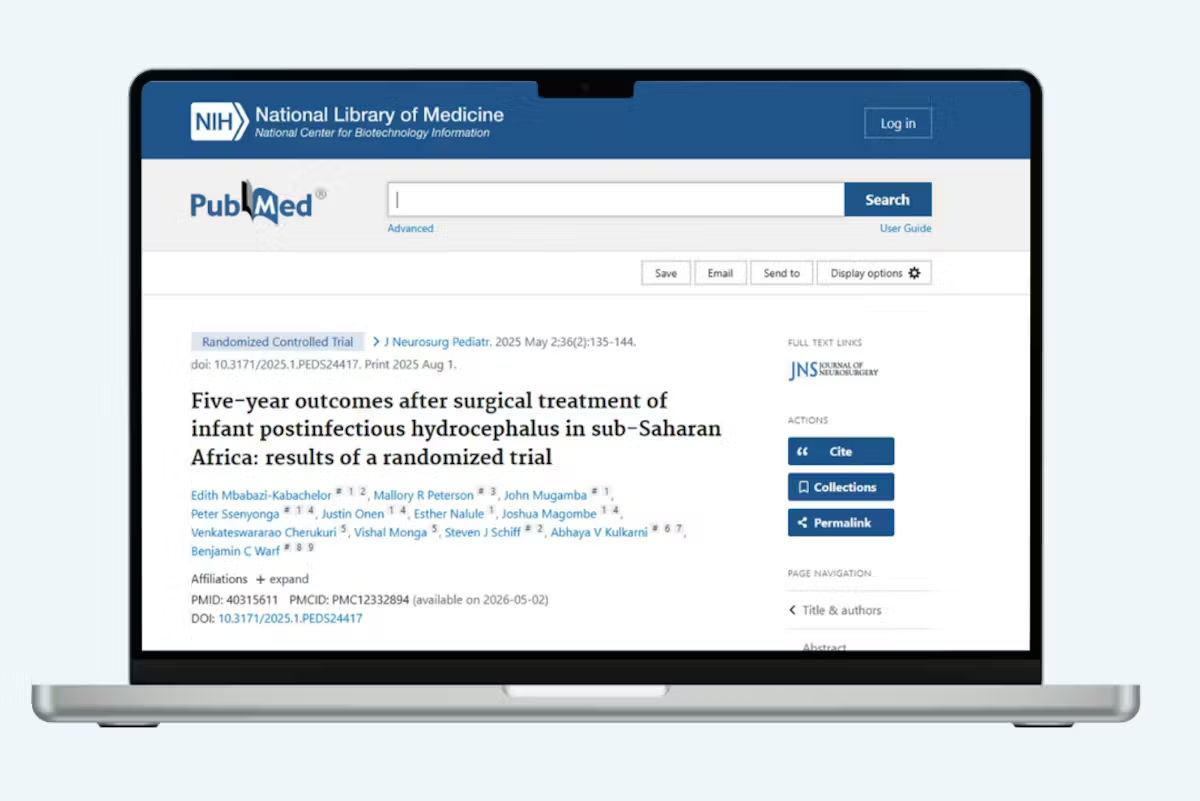
We are pleased to present this month’s interesting paper, “Five-year outcomes after surgical treatment of infant postinfectious hydrocephalus in sub-Saharan Africa: results of a randomized trial” authored by:
Edith Mbabazi-Kabachelor, Mallory R Peterson, John Mugamba, Peter Ssenyonga, Justin Onen, Esther Nalule, Joshua Magombe, Venkateswararao Cherukuri, Vishal Monga, Steven J Schiff, Abhaya V Kulkarni, Benjamin C Warf
This research on postinfectious hydrocephalus (PIH) in infants from Uganda addresses a critical public health issue in sub-Saharan Africa. Following a five-year follow-up of 100 infants, the study found that both endoscopic third ventriculostomy with choroid plexus cauterization (ETV/CPC) and ventriculoperitoneal shunt (VPS) provide comparable long-term outcomes in terms of brain growth, development, and quality of life. The strong correlation between brain volume and developmental metrics highlights the need for tailored interventions in this vulnerable group. This research not only enhances our understanding but also informs treatment strategies in resource-limited settings.
Season’s greetings

As the year comes to a close, we want to thank our members, colleagues,
and friends for an inspiring 2025. Wishing you a joyful holiday season and a healthy, successful 2026!
|
|
 |
|
Stay connected.
Follow us on Social!


 |
Don’t forget to subscribe to our new YouTube channel! |